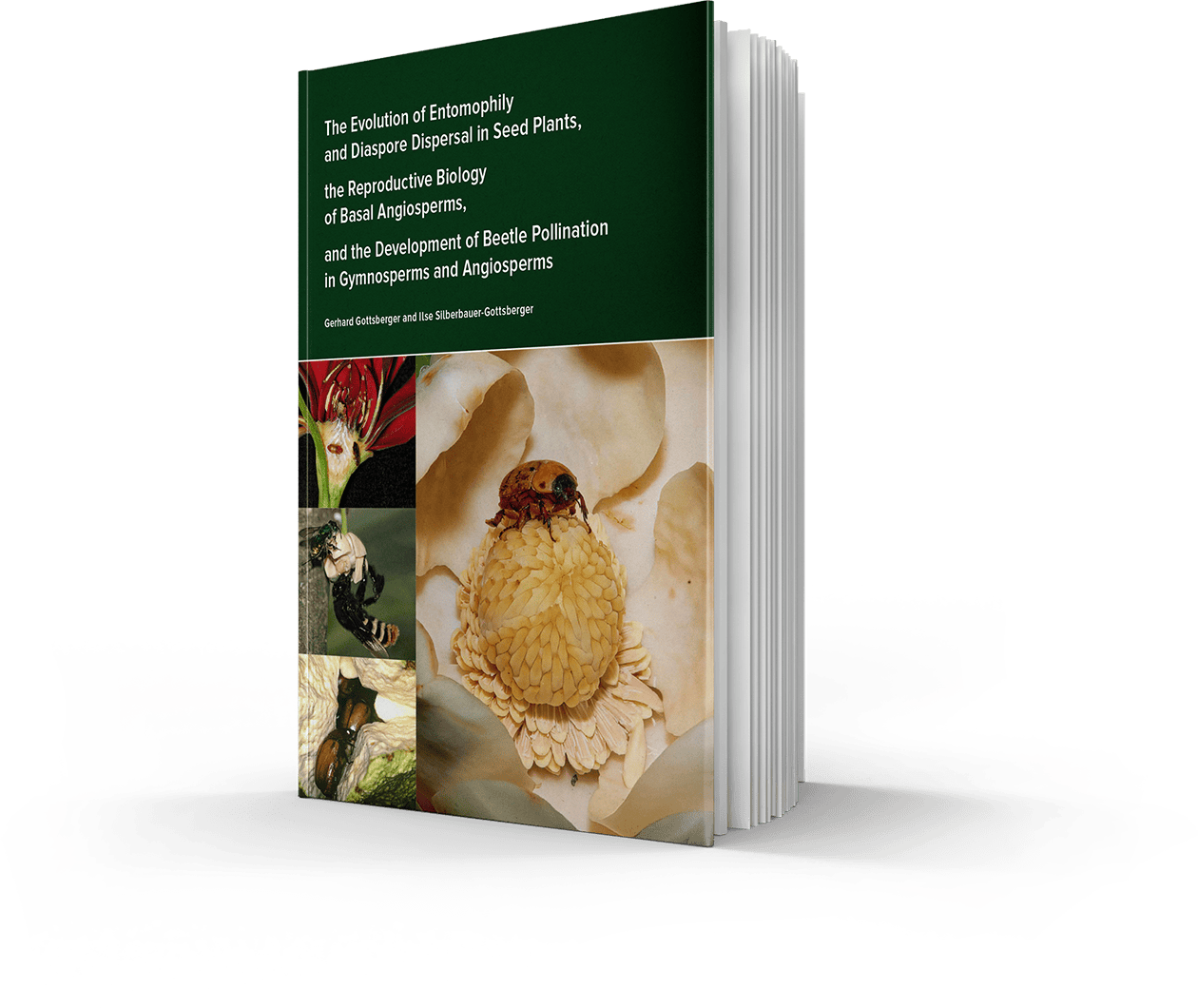
The Evolution of Entomophily
and Diaspore Dispersal in Seed Plants,

the Reproductive Biology
of Basal Angiosperms,

and the Development of Beetle Pollination
in Gymnosperms and Angiosperms

Gerhard Gottsberger and Ilse Silberbauer-Gottsberger

The Evolution of Entomophily and Diaspore Dispersal in Seed Plants, the Reproductive Biology of Basal Angiosperms, and the Development of Beetle Pollination in Gymnosperms and Angiosperms

What Will You Get From This Book?

The book provides up-to-date information of evolution of land plant reproductive biology (pollination modes, seed dispersal and breeding systems) during the last 400 million years. What were the characteristics of the hypothetical survivors of early angiosperms?

These questions are an active area of research and debate today.

The book considers the importance of beetles in pollination, in certain gymnosperms, and in basal and certain advanced angiosperms.

The facts and discussions presented in this book, based on the author´s broad experience and critical review of the pertinent literature, makes this tome an indispensable tool for biologists interested in the evolution of plant reproductive biology.

Where to buy

Now available through the publisher tredition in three editions: hardcover, softcover, and ebook. Select the edition that best fits your preference and enhance your understanding of this complex and evolving field of plant reproductive biology.

The Book Chapters

  • 1 INTRODUCTION
  • 2 SPORE DISPERSAL IN BRYOPHYTES (MOSSES)
  • 3 POLLINATION AND REPRODUCTIVE BIOLOGY IN SEED FERNS
  • 4 POLLINATION AND REPRODUCTIVE BIOLOGY IN GYMNOSPERMS 1
  • 5 POLLINATION AND REPRODUCTIVE BIOLOGY IN GYMNOSPERMS 2
  • 6 SEED DISPERSAL IN SEED FERNS AND GYMNOSPERMS
  • 7 PAST AND PRESENT POLLINATORS AND SEED DISPERSERS OF GYMNOSPERMS AND ANGIOSPERMS
  • 8 THE NEWCOMERS: THE ANGIOSPERMS OR FLOWERING PLANTS
  • 9 INTRODUCTION TO POLLINATION AND REPRODUCTIVE BIOLOGY OF BASAL ANGIOSPERMS
  • 10 POLLINATION AND REPRODUCTIVE BIOLOGY OF THE BASAL-MOST ANITA GRADE
  • 11 POLLINATION AND REPRODUCTIVE BIOLOGY OF CHLORANTHALES AND CERATOPHYLLALES
  • 12 FLORAL BIOLOGY AND REPRODUCTIVE BIOLOGY OF MAGNOLIIDS (MAGNOLIIDAE): CANELLALES, PIPERALES, LAURALES, MAGNOLIALES
  • 13 POLLINATION AND REPRODUCTIVE BIOLOGY OF PIPERALES
  • 14 POLLINATION AND REPRODUCTIVE BIOLOGY OF PIPERALESS LAURALES
  • 15 POLLINATION AND REPRODUCTIVE BIOLOGY OF MAGNOLIALES 1
  • 16 POLLINATION AND REPRODUCTIVE BIOLOGY OF MAGNOLIALES 2
  • 17 POLLINATION AND REPRODUCTIVE BIOLOGY OF BASAL MONOCOTYLEDONS
  • 18 FURTHER REMARKS ON BASAL ANGIOSPERMS AND BEETLE POLLINATION
  • 19 EXAMPLES OF BEETLE POLLINATION IN NON-BASAL ANGIOSPERMS
  • 20 OTHER REMARKABLE CASES OF MIXED OR EXCLUSIVE BEETLE POLLINATION IN NON-BASAL ANGIOSPERMS

The aim of the present book is to provide an overview of land plant reproductive biology evolution as presently understood. We provide up-to-date information on how plants have changed during the last 400 million years with respect to their reproductive biology (pollination modes, seed dispersal, and partly also breeding systems). Which groups of plants have evolved from what was originally spore or pollen dispersal by wind or water to dispersal by insects (entomophily)? To address this, we explore how extinct groups, such as the Bennettitales, may have reproduced. What were the characteristics of the hypothetical survivors of early angiosperms and were those groups pollination generalists or specialists? These questions are an active area of research and debate today. How were early seeds and fruits constructed and how did they function? How were these diaspores dispersed in gymnosperms and angiosperms? Another phenomenon emphasized in this book is pollination by beetles, which occurred and still occurs in the geologically very old group cycads, and a case is made that it occurred in the extinct Bennettitales. Beetles, along with flies, but also thrips, bees, cockroaches, and even moths, are pollinators of basal and non-basal angiosperms, but in several gymnosperms and basal angiosperms, beetles are especially important pollinators such that cantharophilous characters are deeply imprinted in the flowers of many angiosperm taxa.

The book has three main parts. 1) Devel­opment of entomophily and seed dispersal in land plants, 2) Pollination and seed dispersal in certain gymnosperms and basal angiosperms, and 3) Importance of beetles in pollination and discussion of other existing forms of pollination, in certain gymnosperms, and in basal and certain advanced angiosperms.
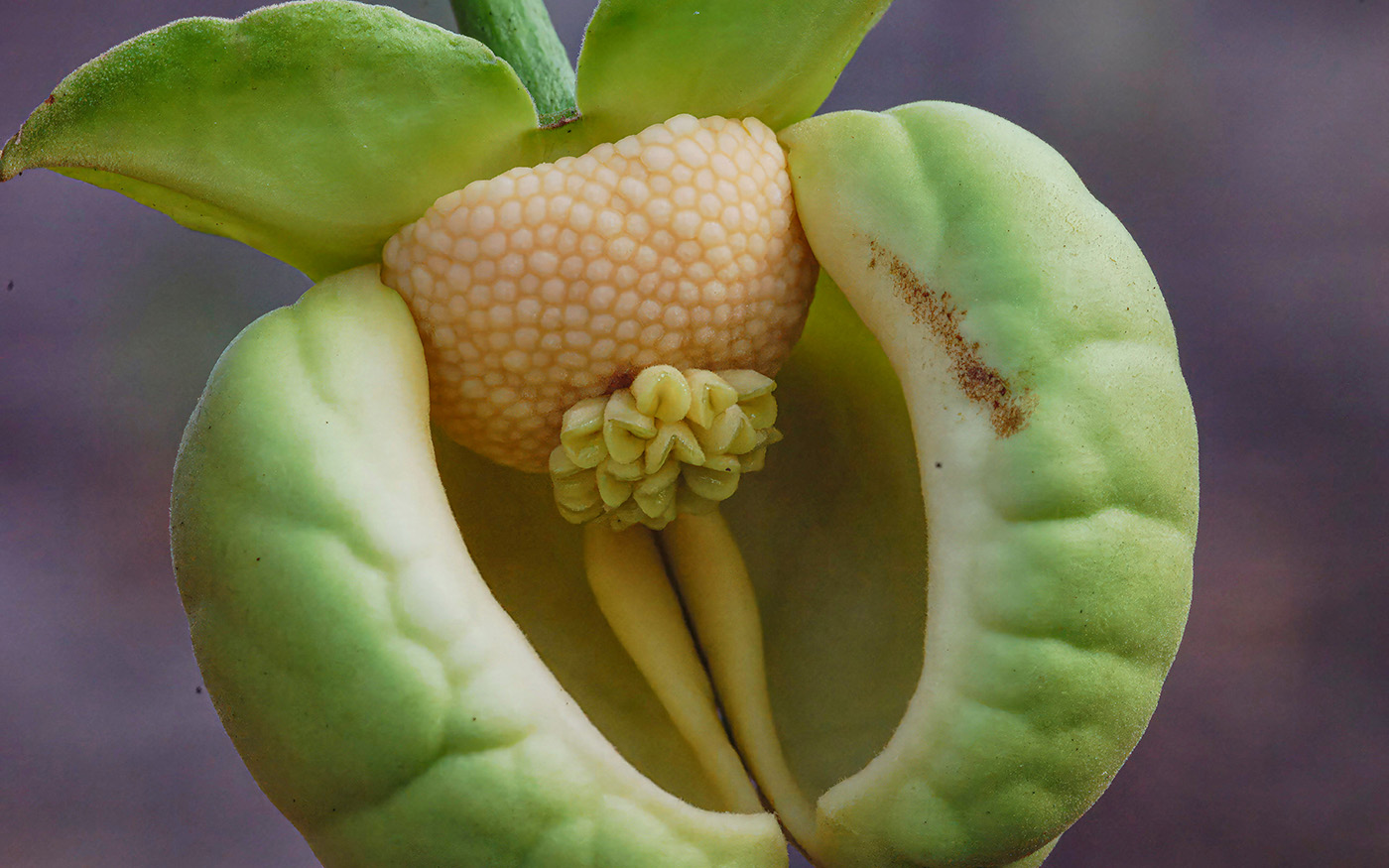
Cymbopetalum euneurum - View of nearly mature flower interior, one petal removed. Note boat-shaped petals.
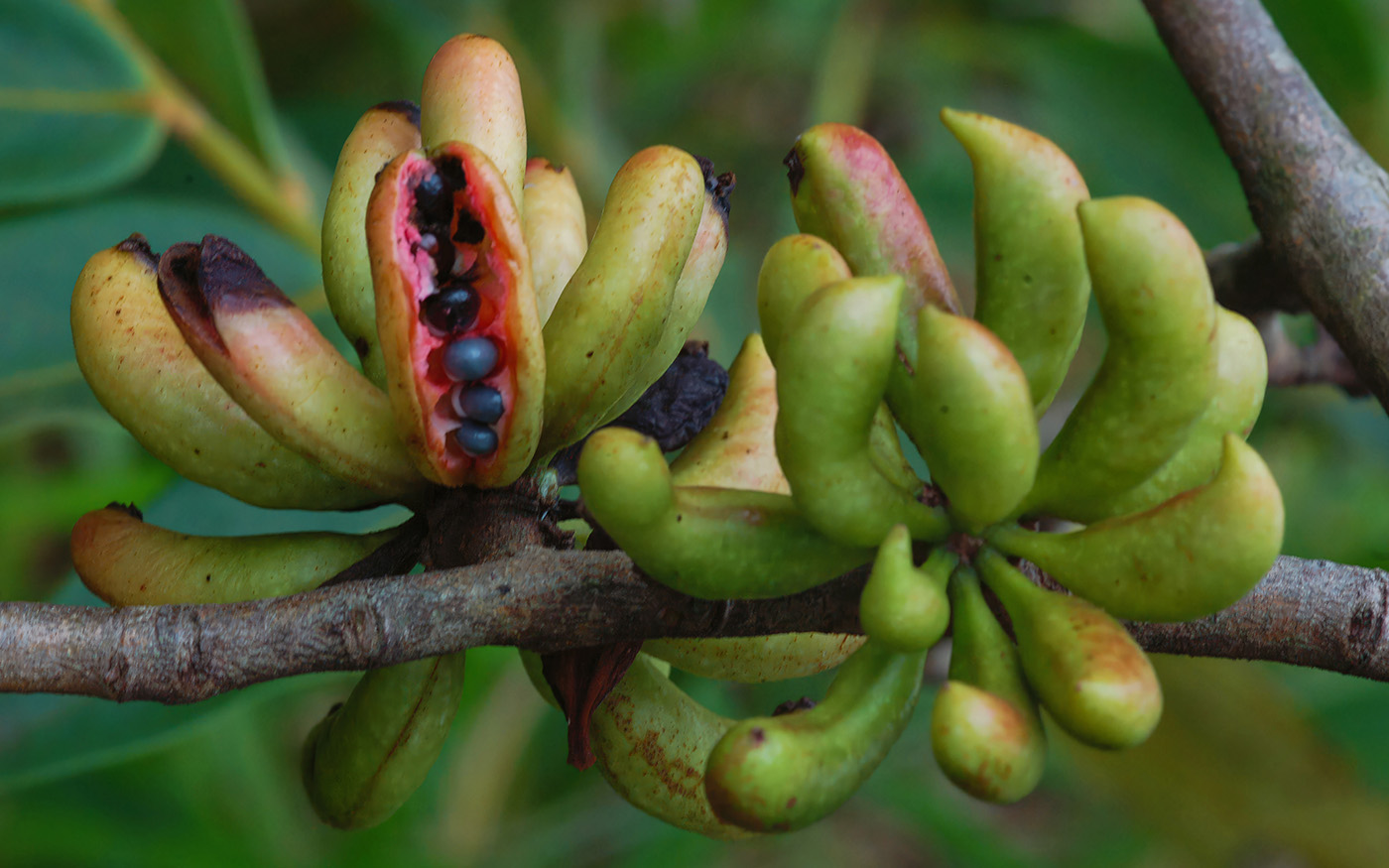
Cymbopetalum euneurum - Immature (green), nearly mature (red-yellow) and mature dehisced (exposing black seeds) fruits.
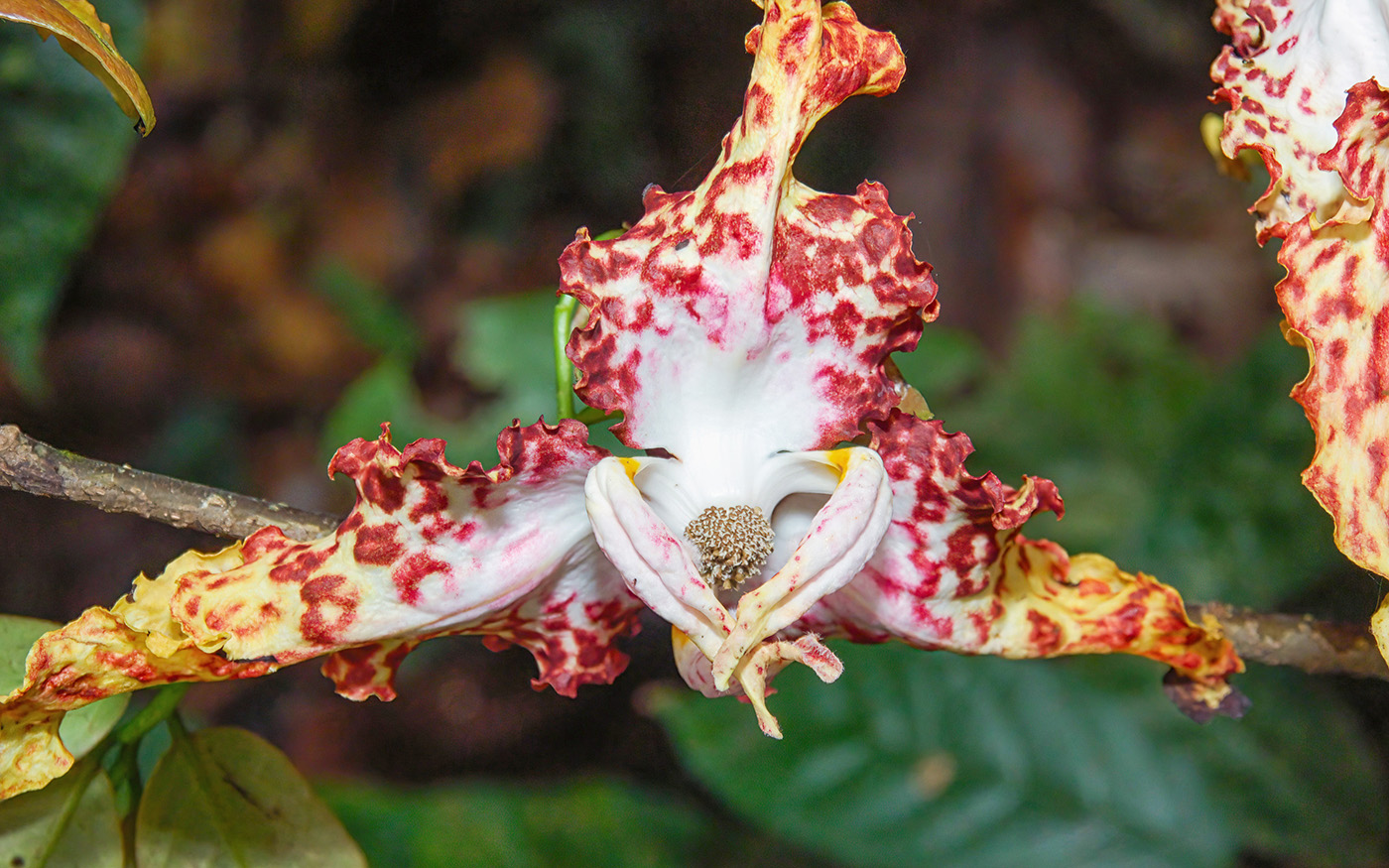
Monodora tenuifolia - Flower in male stage. Outer petals are extended while inner petals recurve over flower center and each other.

The book "The Evolution of Entomophily and Diaspore Dispersal in Seed Plants, the Reproductive Biology of Basal Angiosperms, and the Development of Beetle Pollination in Gymnosperms and Angiosperms" by Gerhard Gottsberger and Ilse Silbebauer-Gottsberger is a true masterpiece. Spanning 480 meticulously written pages, this work represents the culmination of two lifetimes of research by an admirable pair of scholars.

Divided into 20 chapters, the book comprehensively covers the evolutionary biology of plant reproduction from the Devonian period onward, with a primary focus on entomophily. It examines the reproductive biology and pollination mechanisms across various plant groups, including Bryophytes, Seed Ferns, Gymnosperms, and Angiosperms. The diaspore dispersal in Seed Ferns, Gymnosperms, and Angiosperms is presented in detail. All anatomical, phenological, and evolutionary aspects are carefully illustrated with examples from Europe, Africa, Australia, and North and South America. The figures and photographs included are remarkable. In the final chapters, the authors highlight the history of beetle pollination in Laurales, Magnoliales and basal Angiosperms with exceptional clarity.

A close reading of this book clearly demonstrates the crucial role of mutualism in shaping life on Earth and supporting its biodiversity, especially those related to pollination. Above all, this book serves as a testament to a life dedicated to science.

Kleber Del Claro and
Helena Maura Torezan Silingardi

This book deals with the three themes announced in the title, a bit difficult to unify under a unique encompassing sentence. But, facing the task, it treats plant reproduction, from Bryophytes to basal Angiosperms, i.e., the evolution of reproduction of land plants from 400 million years ago up to nowadays.

The subjects are developed in 20 chapters, each one treating a plant group, eg., Seed ferns, Gymnosperms, different orders of basal Angiosperms. Within these orders, some families (and genera included in those families) are exemplified with numerous detailed case studies.

The majority of the chapters end with a “Comment section”, a sort of summary where the main features of the chapter are highlighted.

Not only concluding remarks are exposed, but also critical analysis to scant evidence-based generalizations and the story of evolution of the thought about pollination in the extant lineages of the ANITA grade.

Most of the text is illustrated with photographs, the majority of which are close-up shots, of remarkable high quality, especially the ones concerning Coleoptera. The rest of the accompanying information appears in a few drawings, schemes, tables and graphs, which are rather clear.

This book fills various gaps in plant sexual reproduction, for instance, pollination and also diaspore dispersal of extinct ferns and extinct gymnosperms, as well as beetle pollination, a quite little payed-attention insect order as pollinators.

Useful for teaching in Botany, Paleobotany, Plant Reproductive Biology, either for consultation in undergraduate or for deeper inquiry in postgraduate courses, this bibliographic source reflects the many years dedicated to research of both authors, constituting part of their legacy for future investigations.

Amela Garcia MT

Other Works by the Authors

Beyond this book, Gerhard Gottsberger and Ilse Silberbauer-Gottsberger have also authored the comprehensive two-volume monograph Life in the Cerrado, which explores one of the world’s most important biodiversity hotspots — the Brazilian savanna biome.

Their dedicated website provides detailed information, chapter contents, and reviews: www.cerrado.eu

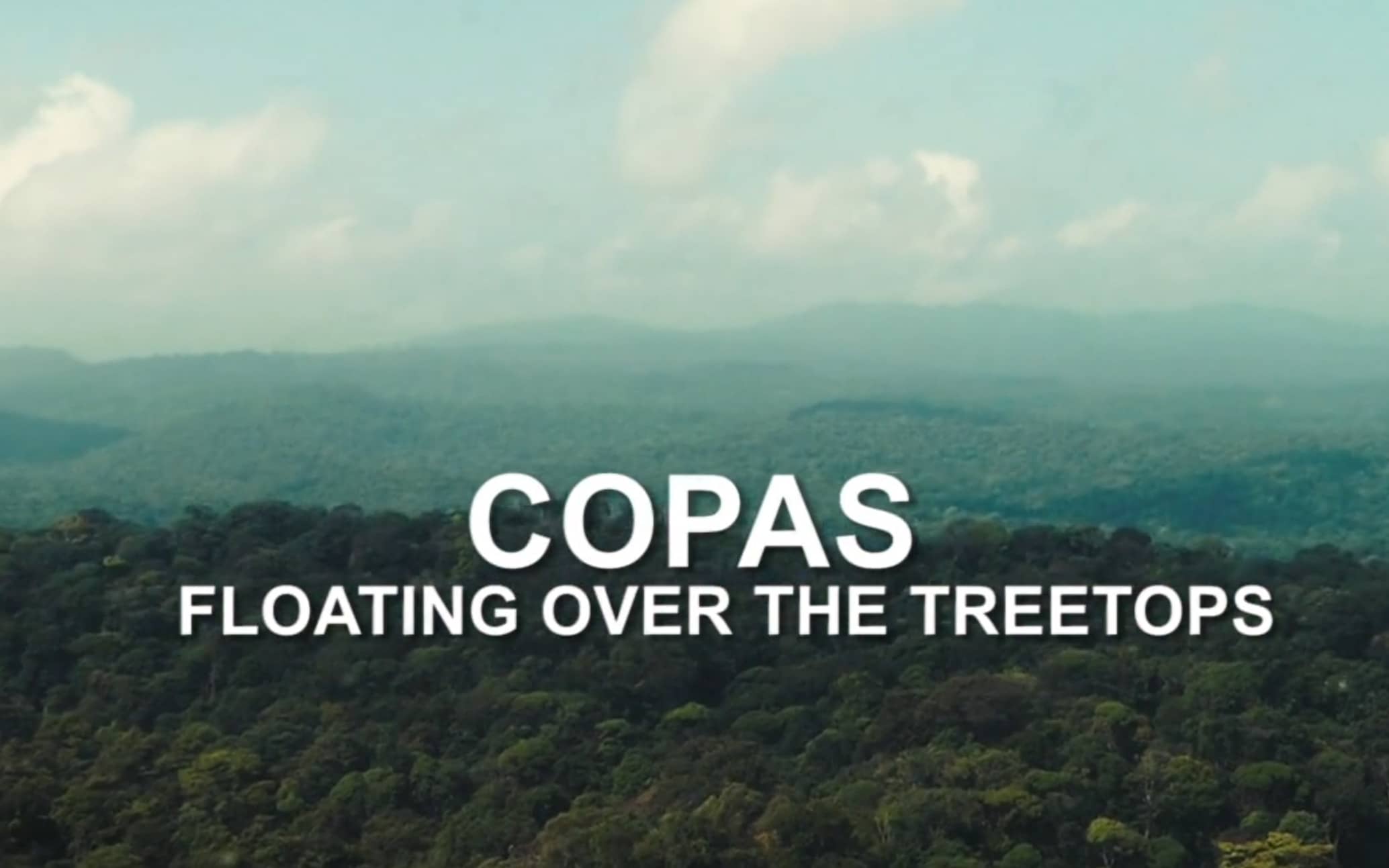
COPAS: Floating Over the Treetops

Tropical forests cover only about 3% of Earth’s surface but harbor between 50–80% of all plant and animal species. To explore these last great frontiers, the Canopy Operation Permanent Access System (COPAS) was developed by Prof. Dr. Gerhard Gottsberger and many collaborators. The project was mainly financed by the Körber Stiftung, and additionally by the University of Ulm and Baden-Wuerttemberg, by the French CNRS and the EU. Erected in French Guiana in 2014, COPAS is a three-dimensional cable-car system that allows scientists to access nearly every part of the canopy over 1.5 hectares.

Watch the film “COPAS: Floating Over the Treetops” by Rudolf Gottsberger, featuring contributions from Prof. Dr. Gerhard Gottsberger, Dr. Philippe Gaucher (CNRS Guyane), and Dr. Jerome Chave (Nouragues Station / LabEx CEBA).

Imprint

The Evolution of Entomophily and Diaspore Dispersal in Seed Plants, the Reproductive Biology of Basal Angiosperms, and the Development of Beetle Pollination in Gymnosperms and Angiosperms

AUTHORS:
Gerhard Gottsberger [gerhard.gottsberger@uni-ulm.de]
and
Ilse Silberbauer-Gottsberger [ilse@cerrado.eu]

CONTACT:
Herbarium Universität Ulm
D-89081 Ulm, Hans-Krebs-Weg
ilse@cerrado.eu

© 2026 Gerhard Gottsberger & Ilse Silberbauer-Gottsberger